Surfactants release attached soil.
Cleaning agents help separate oily and sticky soil from the carpet fiber so agitation can move it into the solution.

The process in plain language
Commercial carpet collects dry soil along with oily and sticky residue that clings to the fiber. Encapsulation cleaning addresses both. Thorough pre-vacuuming removes loose dry soil first. A low-moisture detergent is then applied and agitated to release the remaining soil from the carpet fiber.
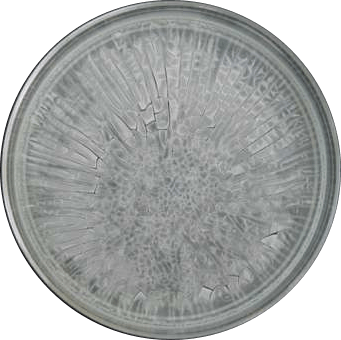
As the carpet dries, Releasit’s crystallizing polymer surrounds and holds the released soil. The dried polymer becomes brittle and non-sticky, preparing the soil-laden residue for recovery during routine post-vacuuming. This leaves the carpet in a soil-resistant condition so it can stay clean longer and become easier to maintain over time.
What happens at the fiber
The chemistry is designed to move soil away from the carpet fiber and hold it until the carpet is dry enough for vacuum recovery.
Cleaning agents help separate oily and sticky soil from the carpet fiber so agitation can move it into the solution.
The crystallizing polymer surrounds the released soil instead of leaving a sticky detergent residue on the carpet.
As moisture evaporates, the polymer dries around the captured soil and becomes a removable, non-sticky residue.
Normal carpet use helps the brittle residue release from the fiber. Routine vacuuming then recovers the soil-laden crystals.
A complete encapsulation workflow
Always follow the mixing and application directions on the label of the specific Releasit product being used.
Identify the fiber, soil conditions, spotting needs, and cleaning method before selecting the Releasit product and equipment for the job.
Vacuum slowly and thoroughly, paying close attention to traffic lanes and areas where dry soil has accumulated.
Use the approved dilution and application directions for the selected formula. Do not guess or substitute a dilution from another product.
Make a moderately fast wet pass followed by a slower minimal-moisture pass. A thin, light foam is enough to distribute the solution through the carpet.
During drying, the polymer holds released soil in a brittle residue. Avoid over-wetting; use additional agitation passes rather than additional solution on heavily soiled areas.
Vacuuming removes the soil-laden crystallized residue. This recovery step can be integrated into the facility’s next scheduled vacuuming cycle.
Why crystallization matters
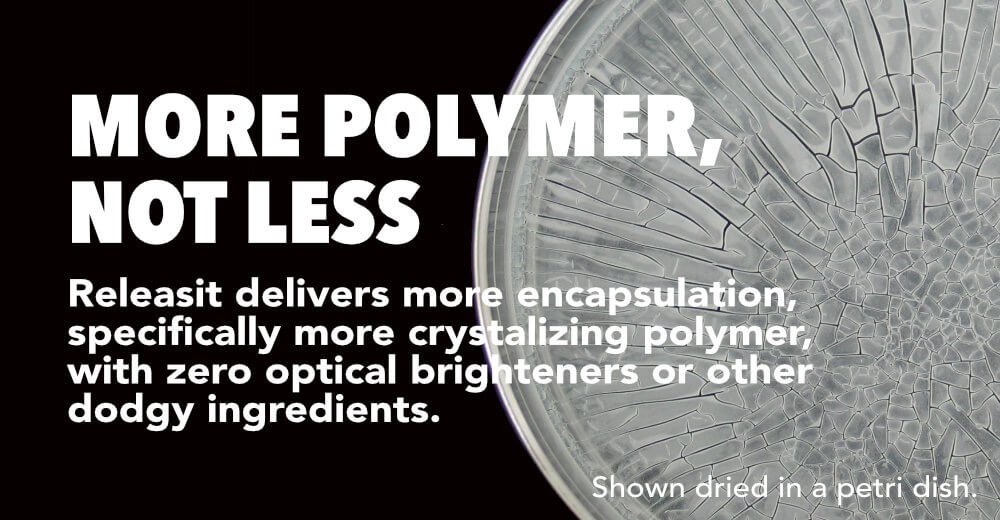
An encapsulation detergent must do more than clean while it is wet. It also needs to dry into a distinct, brittle crystal that can release from the carpet fiber. A sticky or gummy residue can remain in the carpet and attract new soil; a well-formed crystal supports removal through post-vacuuming.
A simple petri-dish drying test makes the difference visible: a good encapsulation formula forms a defined crystal rather than drying into a soft or sticky film.
What this means on the job
Controlled application and agitation reduce the need to saturate the carpet during routine maintenance cleaning.
Lower moisture levels help carpet dry sooner, which can reduce disruption in occupied commercial facilities.
Once the carpet is dry, post-vacuuming removes the brittle polymer and the soil it holds.
The non-sticky condition helps the carpet resist new soil, so it stays clean longer and routine maintenance becomes easier over time.
Put the process to work